
Plant Guide
Selecting Aquatic Plants for Freshwater Tanks
A species-by-species overview of commonly cultivated aquarium plants — covering growth requirements, substrate preferences, and placement strategies.
Read the guide →Detailed, experience-based information on establishing freshwater tanks, selecting compatible plant species, and sustaining stable aquatic ecosystems — written for hobbyists across Poland.

Featured Articles
Three focused guides covering the main areas of freshwater aquarium keeping — from plant selection to tank setup and fish compatibility.
Plant Guide
A species-by-species overview of commonly cultivated aquarium plants — covering growth requirements, substrate preferences, and placement strategies.
Read the guide →
Setup Guide
Tank cycling, substrate layering, filtration selection, and lighting — a structured walkthrough of the equipment and decisions involved in starting an aquarium.
Read the guide →
Fish Care
Water parameter requirements, feeding schedules, and species compatibility for common community fish — including neon tetras, corydoras, and livebearers.
Read the guide →Why Planted Tanks
Live aquatic plants carry out biological functions that influence water chemistry and fish behaviour. Understanding these interactions helps hobbyists make informed stocking and maintenance decisions.
Aquatic plants absorb ammonia and nitrates directly through their leaves and roots. In a well-planted tank, this uptake reduces the workload on biological filtration and can slow the accumulation of harmful nitrogen compounds between water changes.
During photosynthesis, submerged plants release dissolved oxygen into the water column — an important supplement to surface agitation in densely stocked aquariums. At night, this process reverses, so monitoring O₂ levels in heavily planted, low-circulation tanks is advisable.
Fast-growing stem plants such as Vallisneria and Hygrophila consume nutrients that would otherwise fuel algae growth. A balanced light schedule combined with sufficient plant mass is one of the more reliable methods for limiting persistent algae outbreaks.
Dense plant cover reduces aggression in territorial species and provides spawning sites and refuge for smaller fish. Species like corydoras and dwarf cichlids behave more naturally in structured environments that replicate their native river or lake habitats.
Featured Plant
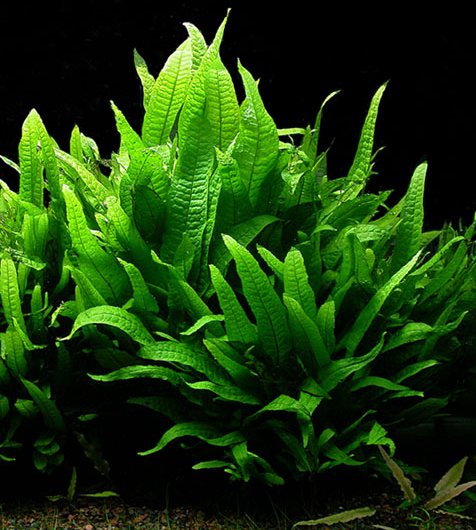
Species Profile
Microsorum pteropus, commonly called Java fern, originates from Southeast Asia where it grows attached to rocks and submerged wood along stream banks. In aquariums, it tolerates a wide pH range (5.5–8.0) and functions well under modest lighting — making it suitable for tanks without CO₂ injection.
Contact
Use the form below to reach out with questions about content on this site. No personal data is stored or transmitted — this form operates in the browser only.